KEEP
Existing Equipment
CUSTOMER EQUIPMENT
Receiving / feeding
Packing equipment
Retain compatible sections.Receiving conveyors, usable feeding sections, suitable packing equipment and compatible control components
An existing fruit sorting line does not always need to be replaced to meet new production requirements. GELGOOG helps packhouses upgrade their current facilities by reviewing retained equipment, adding new sorting functions, adapting line interfaces and connecting existing operations with new grading and packing requirements.
From feeding and fruit presentation to inspection, grade routing and downstream packing, GELGOOG organizes retrofit projects around the existing line and the production improvements the business wants to achieve.
GELGOOG retrofit projects connect existing receiving, conveying, sorting and packing equipment with new feeding, presentation, inspection, grading, routing and control functions.
The retrofit review identifies which equipment can remain, which interfaces require adaptation and which new modules are required to reach the target production and grading objectives.
Illustrative Retrofit Planning Diagram — module order, functions and outlet arrangements are project-specific.
A retrofit plan is built from the existing line flow, fruit handling, equipment interfaces, controls, utilities, available space, target grades and upgrade window.
The objective is to make existing equipment work as part of a coordinated production system rather than replace every machine when only selected functions need improvement.
A practical retrofit starts by separating existing equipment into four categories.
Receiving conveyors, usable feeding sections, suitable packing equipment and compatible control components
 1Transfer / outlet interface
Transfer points, conveyor heights, spacing, speed coordination, electrical signals and product handover
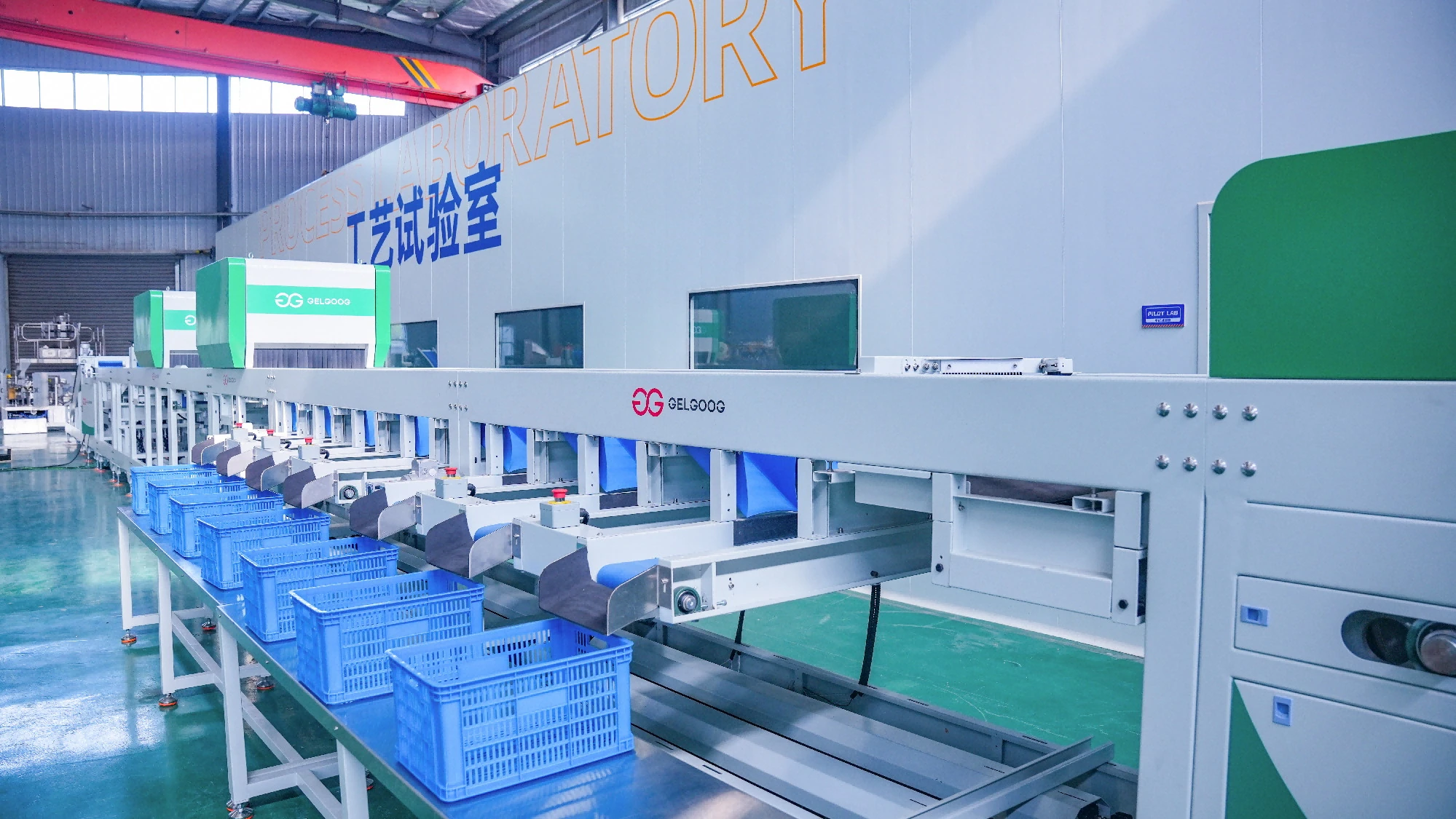
 Inspection module exterior
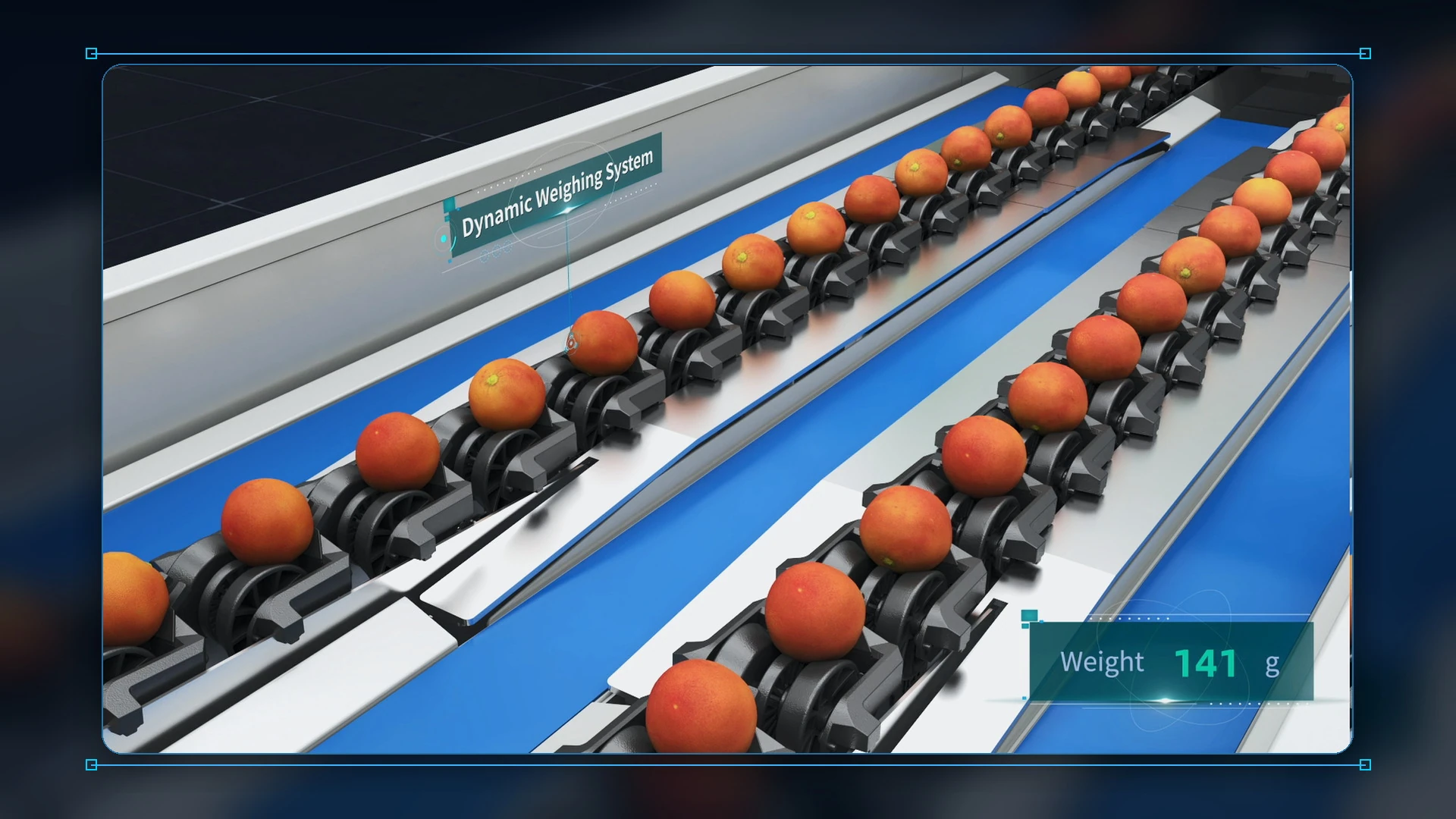 Individual-fruit carriers
Feeding and singulation, external-quality inspection, internal-quality assessment, dynamic weighing, grading logic and outlet routing
Sections that cannot meet the required handling, speed, space, control or grade-routing requirements
Scope outlines are illustrative. Equipment images show GELGOOG hardware references, not a customer retrofit case.
Existing equipment can remain part of the upgraded line when its mechanical condition, operating function and connection with the proposed system are suitable.
For example, a packhouse may retain its receiving conveyor and packing equipment while introducing new inspection and grading modules between those stages.
New equipment can extend the functions of an existing line.
Additional weighing, external-quality inspection, internal-quality assessment or grade outlets can be connected through adapted conveying, electrical and control interfaces.
The result is a retrofit scope focused on the actual production gap rather than a complete equipment replacement.
A retrofit plan retains suitable receiving conveyors and packing equipment while introducing new inspection and grading modules between those stages.
GELGOOG organizes a retrofit through seven connected stages.
Understand how fruit currently moves from receiving through feeding, sorting, collection and packing.
Identify existing machines, transfer heights, available space, utilities, controls and handover points.
Connect the planned improvement with fruit types, commercial grades, target throughput and packing requirements.
Separate equipment that can remain from the interfaces and functions requiring changes.
Plan how new modules connect with fruit presentation, dynamic weighing, selected quality inspection and grading decisions.
Coordinate physical product routes, receiving equipment, control signals and operating handovers.
Organize the equipment list, interface modifications, installation requirements, production-window considerations and next validation step.
The retrofit review connects existing equipment with the planned upgrade. It shows how fruit moves through the line, where new inspection or grading functions are introduced, how signals and product transfers are connected and which sections require modification.
A retrofit must match the operating speed of the existing line with the feeding, inspection, grading and packing functions added to the project.
GELGOOG reviews four connected production figures:
Fruit entering the existing line
Fruit processed through the sorting equipment
Fruit assigned to the defined commercial grades
Product received and completed by downstream operations
If sorting can process more fruit than packing can receive, the packing route may become the limiting section.
This identifies whether the main constraint sits in feeding, fruit presentation, inspection, grading, outlet routing or packing.
For example, adding an inspection module does not resolve a line bottleneck when the existing packing section cannot receive the additional sorted output. Likewise, increasing feeding speed without matching inspection and outlet capacity can create accumulation between machines.
GELGOOG connects these operating figures with fruit size, average weight, grade distribution and downstream receiving requirements when planning an upgrade.
Related resource: Capacity Planning.
An existing fruit line can gain additional grading functions without automatically replacing its complete conveying and packing arrangement.
GELGOOG can integrate selected external-quality inspection functions with the existing fruit flow, grading logic and outlet arrangement.
The upgrade connects fruit presentation and inspection results with the commercial categories and destinations required by the packhouse.
Related resource: External Quality Inspection.
GELGOOG provides optical and spectral inspection modules for internal-quality assessment.
The selected function connects with the existing fruit presentation, grading logic and line interfaces. Reference testing and an agreed internal-quality indicator establish how the sensing result enters the production decision.
Related resource: Internal Quality Assessment.
Dynamic weighing measures individual fruit while it travels on a moving carrier or tray, allowing weight grades to be assigned without stopping product flow.
New weight categories, commercial grade rules and physical outlets can be incorporated into the upgraded line arrangement.
When a packhouse introduces new commercial grades, the physical outlet arrangement and downstream receiving equipment also need to be considered.
GELGOOG reviews the transfer points, buffering, outlet distribution and packing connections as part of the retrofit plan.
A retrofit review organizes the information needed to move from an existing-line assessment to a defined upgrade scope.
The review provides:
Existing equipment that can remain.
Sections requiring modification or replacement.
New modules required for the upgrade.
Transfer points and mechanical interfaces.
Control and utility requirements.
Capacity and operating-speed relationships.
Outlet and downstream packing connections.
Installation and production-window considerations.
Information required for the next technical and commercial step.
The result is a structured retrofit route that connects existing equipment with the proposed production and grading objectives.
Submit your current line details to begin a focused retrofit review.
A complete engineering drawing improves the assessment, but a clear layout sketch, equipment photographs, videos, dimensions and marked-up line images provide a practical starting point.
The most useful initial information includes:
GELGOOG uses these details to organize the retained-equipment review, interface requirements and retrofit scope.
Sample testing can help evaluate new and existing equipment coordination, new inspection-module suitability, grade classification, outlet routing, and sorting and packing interfaces.
See Sample Testing & AcceptanceA fruit sorting line retrofit upgrades an existing production line by retaining suitable equipment, adapting interfaces and introducing new sorting or grading functions. It can improve the line without requiring every existing machine to be replaced.
GELGOOG reviews mechanical condition, electrical and control interfaces, operating speed, available space, fruit handling and downstream connections to identify the equipment that can remain in the upgraded line.
Yes. GELGOOG can integrate selected external-quality inspection with the existing feeding, fruit presentation, grading rules, outlet routing and packing connections.
Yes. GELGOOG provides optical and spectral inspection modules for internal-quality assessment and connects the selected function with existing fruit flow, grading logic and line interfaces.
Yes. A retrofit can address constraints in feeding, fruit presentation, inspection, grading, outlet routing or packing. GELGOOG compares incoming feed rate, sorter throughput, accepted-grade output and packing capacity to identify the relevant upgrade requirements.
A complete drawing improves the review, but a clear layout sketch, equipment photographs, videos, dimensions and marked-up line images provide a practical starting point.
GELGOOG first defines retained equipment, new modules, interface changes, installation scope and project requirements. The approved retrofit scope then provides the basis for the commercial quotation.
GELGOOG uses the submitted information to organize the retained-equipment review, interface requirements, new-module scope and next retrofit discussion.
Planning to add inspection functions, increase grading options, improve capacity or connect existing equipment with a new packing arrangement?
GELGOOG helps organize the existing-line review, equipment changes and integration scope around your production objectives.
Submit your current line details to begin a focused retrofit review.
For a complete new-line or integrated project discussion, use the Get a Project Assessment route.